How to qualify a facility-expansion lead before it reaches an AE
You got the alert: a permit filing, a LinkedIn post about "exciting growth," a job req for a plant manager at a site that didn't have one six months ago. Now you have to decide whether this is worth an AE's calendar time or another dead end that makes you look like you don't screen your own pipeline.
Most facility-expansion leads fall apart at handoff because the SDR qualified the news, not the capex. A press release says a company is "investing in growth." It doesn't say whether dirt has moved, whether the project got shelved in committee, or whether the AE is about to open a conversation about a building that's already framed and roofed.
What actually counts as a signal worth working
Not every mention of "expansion" is a trigger. Before you log an opportunity or request time on an AE's calendar, separate the categories:
Intent-stage noise. Earnings call language, investor-day slides, hiring posts for roles that could be backfill. These are worth a note in the account record. They are not worth a handoff.
Filed but unbuilt. Permit applications, zoning requests, site-plan submissions to a county or township. This is closer. A filed permit means someone committed budget to paperwork, which is a real step, but permits get pulled and projects get re-scoped after filing. Treat a filed permit as a reason to start a monitoring cadence on that account, logged and revisited monthly until something physical shows up.
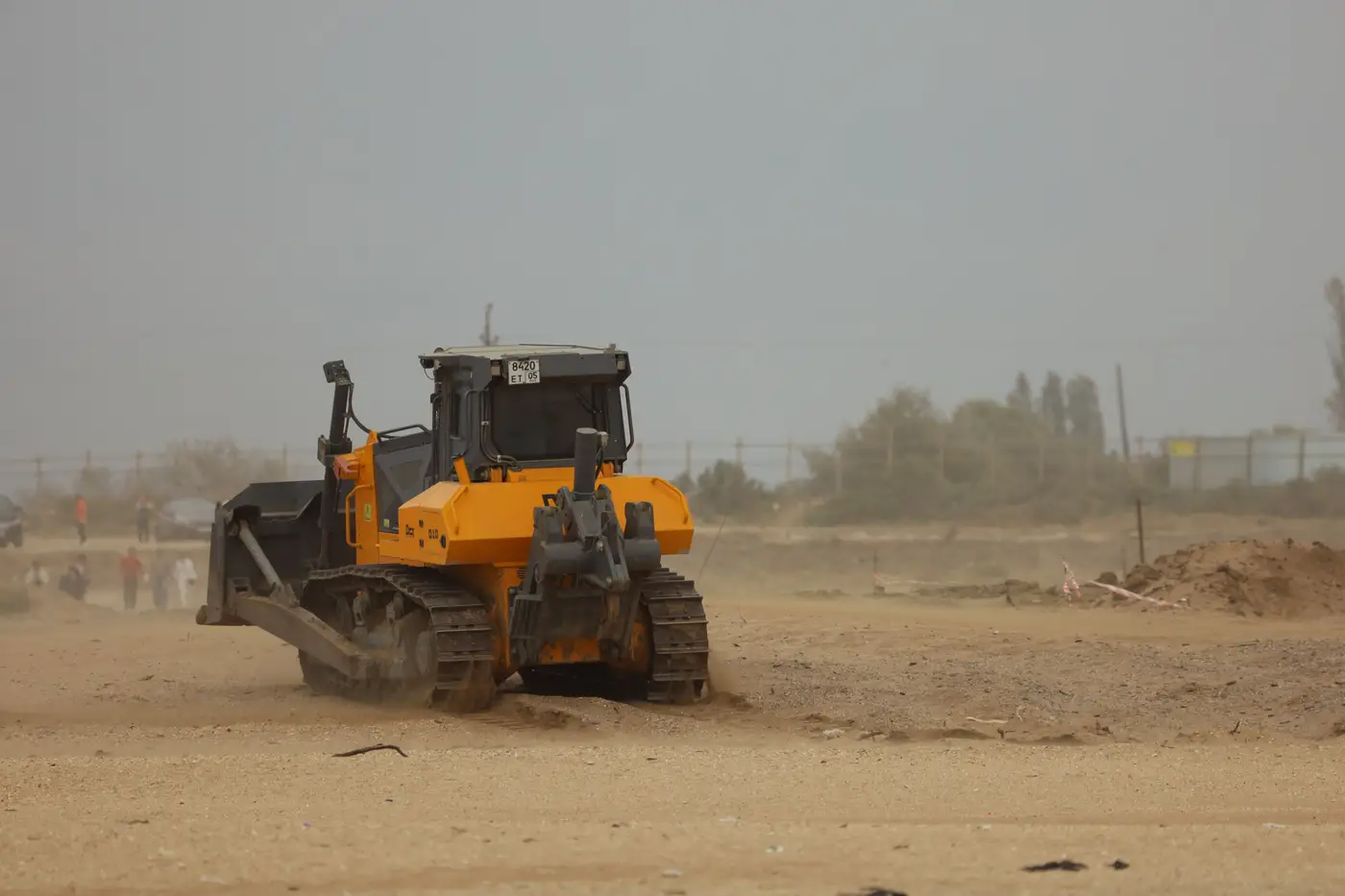
Ground truth. Pad work, foundation pour, new structure visible on site, yard expansion with equipment staged. This is the tier an AE should see, because it means the account already decided to spend and is now executing. At this point the opener gets concrete fast: "I saw the new building going up at your Tulsa site, who's running facilities planning for that."
The gap between "filed" and "ground truth" is exactly where most SDR teams lose months, because the only inputs they have are press releases and permit databases that lag the actual construction by a quarter or two.
The handoff checklist
Before a facility-expansion lead goes to an AE, it should clear four questions:
- Is there a dated event, not just an announcement? "Q3 2025" from an earnings call isn't a date. "New structure first visible on-site in September" is.
- Is it tied to a specific location? Corporate-level capex guidance ("we're investing $200M in capacity this year") doesn't tell an AE which plant, which region, or who the local buyer is. A site-level trigger does.
- Does the size of the build match the account's buying pattern? A small yard extension and a new 200,000-square-foot building imply very different budgets and very different stakeholders. Scope the lead to the build, not the headline.
- Is the AE's first line something only you could know, or something anyone who read the trade press already knows? If the opener is "I saw your press release," you've handed over a cold call wearing a disguise. An opener built on "I saw the new addition going up behind your main plant in August" gives the account a reason to take the meeting.
A lead that clears all four is a real handoff. A lead that clears one or two is a nurture note in the CRM, not a calendar invite.
Where the timing gap actually gets closed
The reason most SDR teams default to press releases and permit scrapes is that nobody else is watching the physical site. Permits lag the decision, press releases lag the concrete, and job postings lag both. The only thing that doesn't lag is the footprint itself.
Capex Signals tracks the footprint of named accounts on a monthly basis and turns new pads, extensions, and yard growth into a dated event tied to a location, flagged roughly when it first appeared and how big it is. That's the input that lets you work the checklist above with facts instead of guesses, and it's the difference between handing an AE a rumor and handing them a site that's already under a crane.
If your team is still qualifying expansion leads off press releases and permit alerts, it might be worth seeing what a ground-truth feed looks like instead.